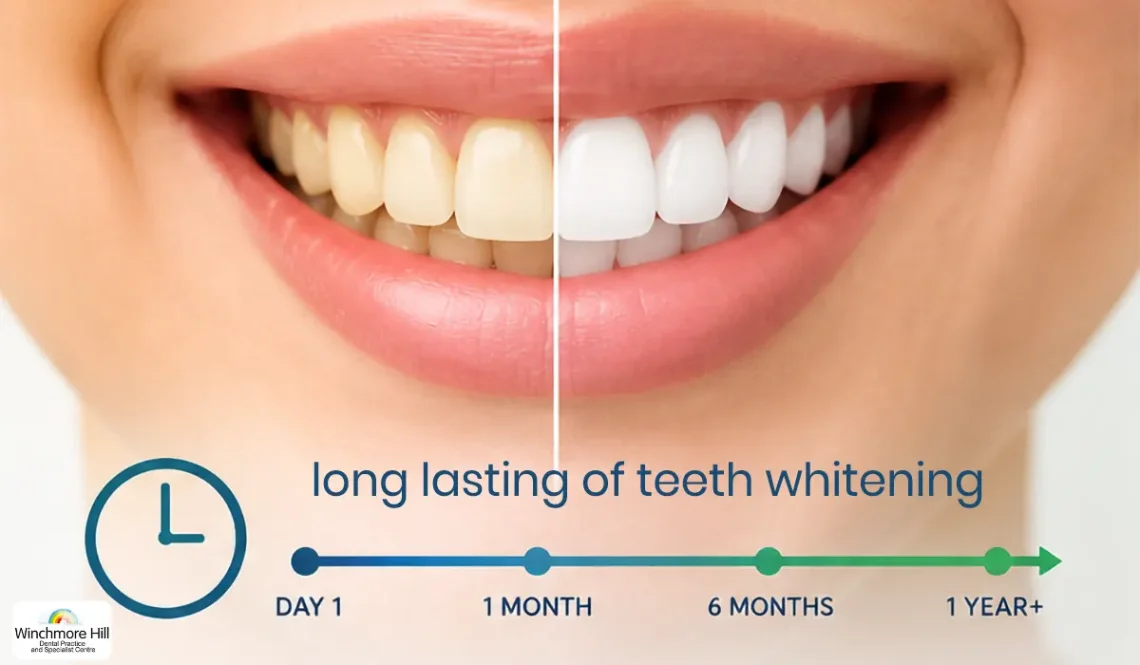
It usually lasts somewhere between a few months and a couple of years, but that’s not the full story. The real answer is more “it depends on how you live after it” than a fixed number.
Some people get whitening done and still look bright a year or two later. Others notice fading in just a few months. Same treatment, different outcome. That’s where most explanations fall short, they treat whitening like a product with an expiry date. It isn’t. It behaves more like a result you maintain.
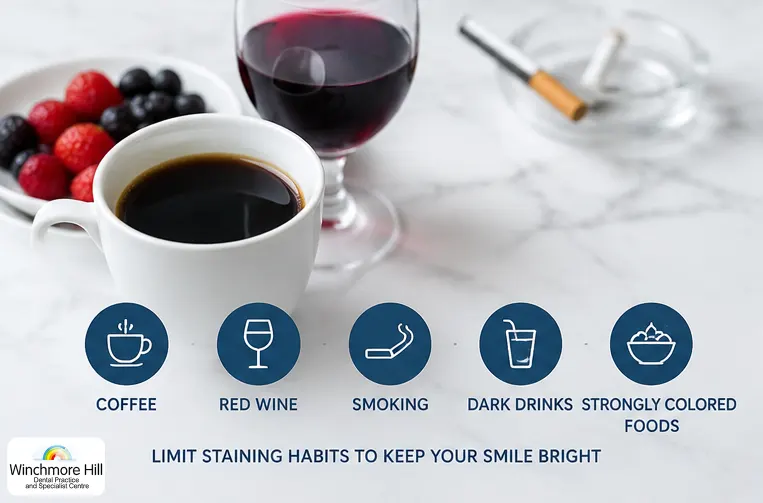
The shade slowly drifts back, not because whitening “stops working,” but because teeth keep picking up colour from everyday life. Coffee in the morning. Tea through the day. The odd snack. Even breathing habits and dry mouth play a role. It’s subtle at first, then one day you just notice your teeth don’t look as clean in natural light.
That’s really what people are asking when they search this: not just how long it lasts, but how fast it fades in real life.
How Long Does Teeth Whitening Last in Real Situations?
If you break it down roughly:
- In-clinic whitening: around 1–3 years with decent care
- Dentist take-home kits: usually 6–18 months
- Shop-bought strips or trays: often 1–3 months of visible change
But these ranges are misleading if you take them too literally. They assume “average habits,” and nobody really lives an average oral hygiene lifestyle.
A better way to think about it is this: whitening gives you a new starting point. After that, your habits decide the slope.
One patient might drink coffee twice a day and rinse after it, still looks good after 18 months. Another sips coffee for hours while working, fading starts in a few months.
Same teeth, different exposure pattern.
Why Whitening Doesn’t Really “Wear Off”
This is where most explanations oversimplify things.
Whitening doesn’t peel off or disappear like a coating. The internal lightening stays there for a long time. What changes is what builds on top of it.
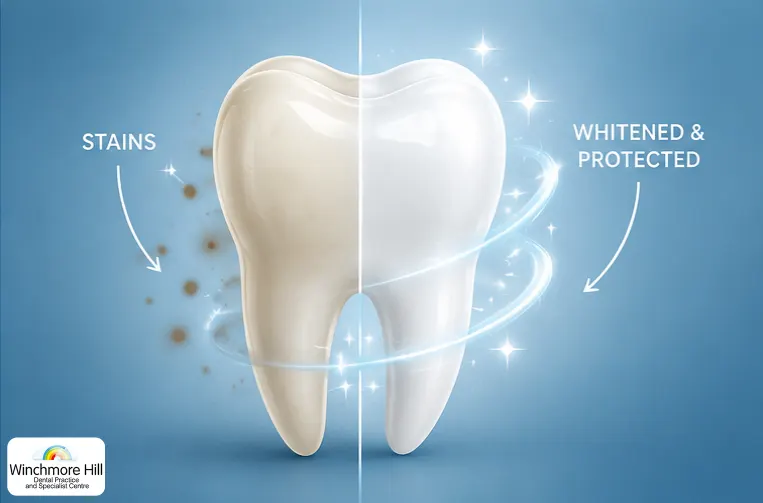
Teeth have microscopic pores in enamel. After whitening, those pores are cleaner and lighter in tone. Over time, pigments from food and drinks slowly settle back in. That’s the real reason colour returns.
So it’s less “whitening stopped working” and more “staining caught up again.”
That’s also why the change feels gradual, not sudden. You don’t wake up one day with yellow teeth again. It creeps in slowly until one day your brain notices it in photos or mirrors.
What Actually Affects How Long Teeth Whitening Lasts
There are a few things that quietly decide how long results hold. Most people only think about coffee, but it’s broader than that.
1. Frequency of staining exposure
Not just what you drink, but how often.
- One cup of coffee with breakfast → low impact
- Sipping coffee across 4 hours → high impact
- Tea all day at work → very high impact
It’s exposure time that matters more than quantity.
2. Smoking or nicotine habits
This one accelerates everything. Teeth don’t just stain, they pick up deeper yellow and brown tones faster than almost any food.
Even light smoking can shorten whitening results dramatically.
3. Natural enamel characteristics
Some people just hold whitening better. It’s not lifestyle-related.
- Thicker enamel → longer-lasting brightness
- More porous enamel → faster staining
- Naturally grey undertones → harder to maintain “white-white” shade
This is why two people can do the same treatment and get completely different timelines.
4. Type of whitening used
There’s a big difference in longevity depending on method.
Professional whitening reaches deeper layers of discoloration. Over-the-counter products mostly deal with surface stains, so results fade quicker.
That’s why dentist-supervised whitening tends to last longer even if the initial “wow” looks similar.
5. Aftercare habits (this is where most results are won or lost)
Small things matter more than people expect:
- Rinsing after coffee instead of letting it sit
- Drinking water throughout the day
- Not brushing immediately after acidic drinks
- Occasional touch-up whitening trays
Nothing extreme. Just consistency.
The Real Fading Pattern Most People Notice
Whitening doesn’t fade evenly. There’s usually a pattern:
First few months: looks unchanged
Nothing obvious. You still feel “newly whitened.”
3–9 months: slight dulling
Not noticeable day-to-day, but photos start revealing it.
9–18 months: uneven change
Front teeth still look okay, canines and lower teeth start picking up more colour.
After 18+ months: back to baseline shade
This depends heavily on habits.
It’s not a failure of whitening, it’s just how enamel re-accumulates pigment.
Small Things That Quietly Shorten Whitening Results
These are the things most people don’t realise are doing damage:
- Drinking coffee right after brushing (enamel is more open briefly)
- Constant snacking (repeated acid + stain exposure)
- Dry mouth (less saliva = less natural cleaning)
- Skipping flossing (plaque holds stains longer than enamel)
- Using harsh whitening toothpaste too often (can increase sensitivity without real whitening gain)
Dry mouth especially is underrated. If saliva flow is low, staining sticks faster.
Can You Make Whitening Last Longer Without Overthinking It?
Yes, but it’s not about perfection.
The people who maintain results longest usually just do a few simple things:
- Drink staining drinks in shorter sessions instead of all day
- Rinse with water after coffee or tea
- Keep regular dental cleanings
- Do a small touch-up every 6–12 months if needed
That’s it. No complicated routine.
Even a professional cleaning can make teeth look noticeably brighter again without any bleaching, just by removing buildup.
Is Teeth Whitening Permanent?
No. And honestly, nothing in dentistry really is when it comes to colour.
But that doesn’t mean it resets to zero quickly either. Whitening gives you a “better baseline,” and from there, things gradually drift back depending on lifestyle.
Some people stretch that baseline for years. Others lose it in months. The difference usually isn’t the treatment, it’s maintenance without thinking about it too much.
FAQ
Anywhere from 6 months to 3 years depending on lifestyle and the type of treatment used.
It’s usually new staining on the enamel surface, not the whitening reversing.
Not when professionally done and spaced properly. Overuse of random products is what causes issues, not whitening itself.
Not permanently, but you can significantly slow fading with basic habits and occasional touch-ups.
Why People Choose Winchmore Hill Dental Practice
At Winchmore Hill Dental Practice, whitening isn’t treated like a quick cosmetic fix, it’s planned around how your teeth actually behave after treatment.
Some people naturally hold whitening longer. Others lose brightness quickly no matter what product they use. That difference matters, because it changes how treatment is planned from the start.
Instead of repeating the same whitening approach for everyone, the focus is on getting a result that fits your routine and doesn’t fade faster than expected. That includes managing sensitivity, choosing the right strength, and planning realistic maintenance rather than overdoing treatment upfront.
If whitening has faded too quickly before, or you’re not sure what result you can realistically maintain, it’s the kind of thing worth getting properly assessed rather than guessing again.
Because the real goal isn’t just whiter teeth for a week, it’s keeping them there long enough that it actually feels like it made sense. For a quick visual summary of the key points covered here, download our Teeth Whitening Longevity Guide.
Reach out or book a consultation here to learn more about long-lasting teeth whitening solutions.