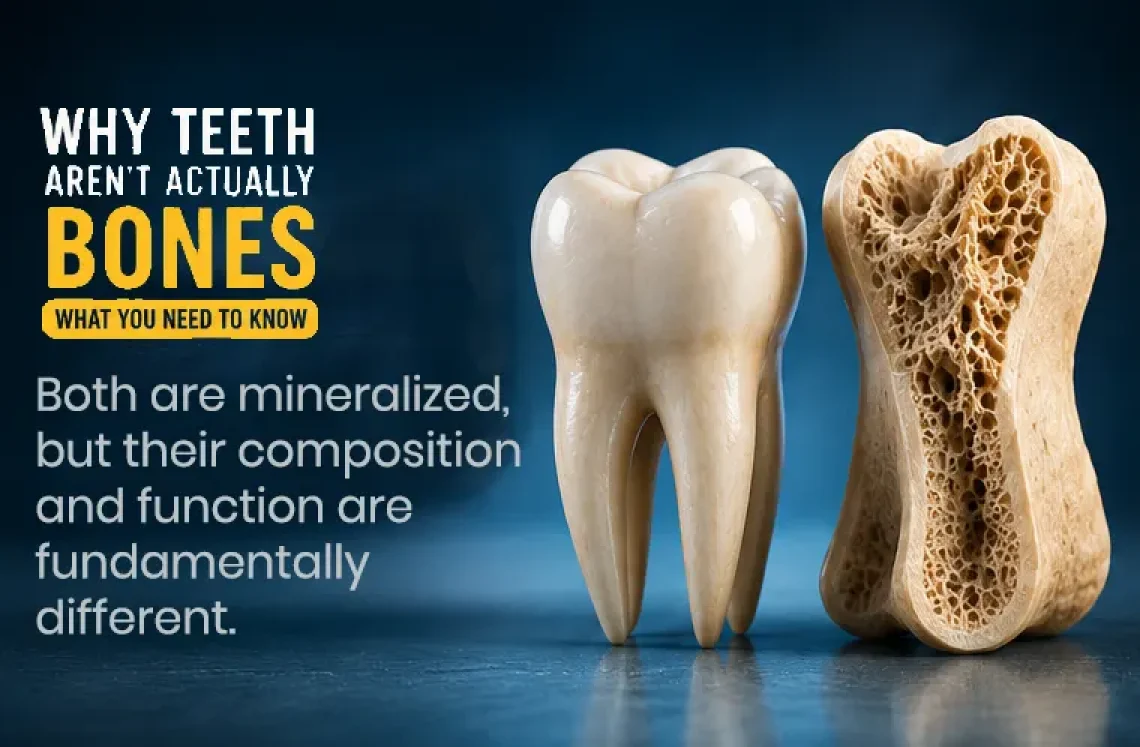
Teeth aren’t bones, and once you really understand that, a lot of dental problems start making more sense. Not in a textbook way. In a real-life way like why a small chip never just “fixes itself,” or why sensitivity sometimes suddenly becomes unbearable instead of slowly healing like a fracture would.
They look similar, sure. Hard, white, calcium-rich structures sitting inside a living body. But that’s where the similarity quietly ends.
The simple truth most people miss about teeth
Bones are alive in a very active sense. They’re constantly rebuilding themselves, reshaping based on stress, repairing damage when something goes wrong.
Teeth don’t do that.
A tooth is more like a hardened structure with a living core. The outside enamel is basically inert. No cells. No regeneration system. Once it chips or erodes, the body doesn’t “patch it up.”
That alone separates teeth from bones completely.
What teeth are actually made of (and why it changes everything)
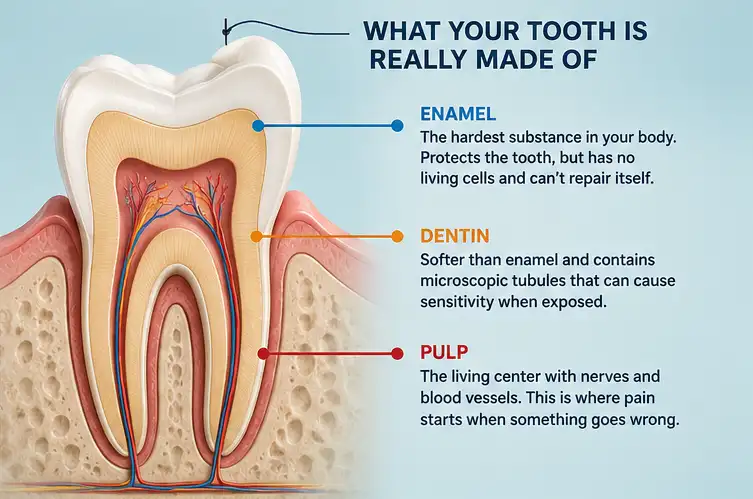
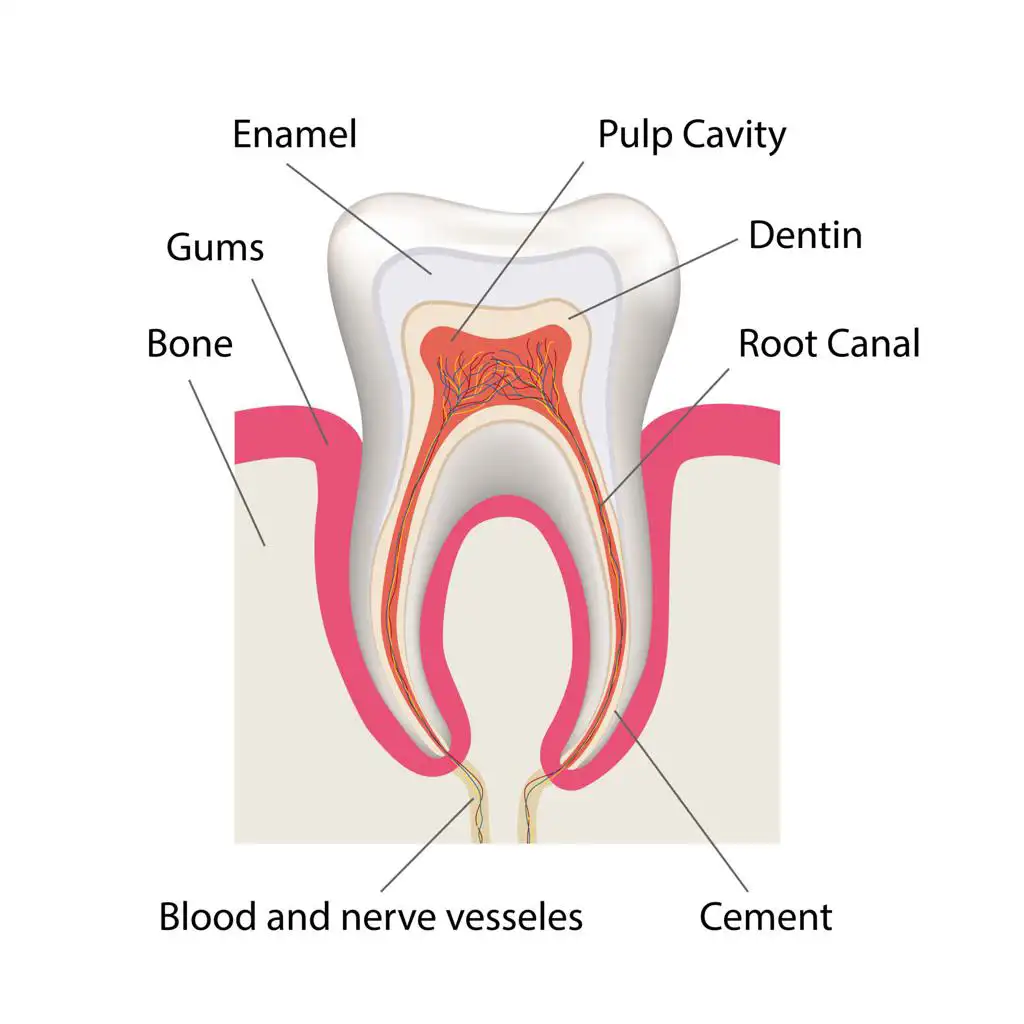
Teeth aren’t one material. They’re layered. Each layer behaves differently, and that’s where most confusion starts.
Enamel the strongest but “dead” layer
Enamel is the outer surface. It’s 96% mineral, harder than bone, even harder than steel in terms of scratch resistance.
But here’s the catch people don’t expect:
it has no living cells.
So when enamel wears down from acid, grinding, or brushing too aggressively over time, there’s no biological repair system kicking in.
Once it’s gone, it’s gone.
Dentin the sensitive middle layer
Under enamel is dentin. Softer, more porous, and connected to nerve pathways.
This is why cold water, sweets, or even air can trigger that sharp sensitivity. It’s not random it’s exposed microchannels reacting directly to stimuli.
Dentin can respond slightly to stress, but it still doesn’t regenerate in any meaningful way.
Pulp the living center
This is the only truly living part of a tooth.
Blood vessels, nerves, immune response. Everything that makes a tooth “feel” pain lives here.
Once decay reaches this level, the situation changes fast. That’s usually where root canals come in, because at that point the body can’t clean or repair the damage on its own anymore.
Why bones heal but teeth don’t
Bones are constantly remodeling. Old cells are broken down, new ones are built. That system is ongoing throughout life.
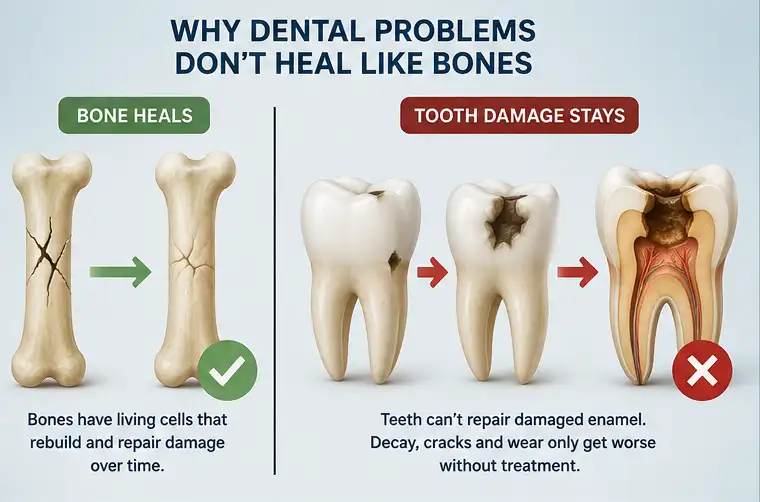
Teeth don’t have that remodeling system in enamel.
So when damage happens:
- Bone → repairs itself over time
- Tooth enamel → does not regenerate
Even dentin has very limited repair capacity, but it’s not enough to restore structure once it’s lost.
This is why dentistry is mostly about restoration, not natural healing.
A clear medical explanation of tooth structure and function is outlined here: MSD Manual Teeth biology
Why people confuse teeth with bones
It’s not a dumb mistake. The body design is actually misleading in this case.
Both:
- contain calcium compounds
- are hard and white
- sit in a skeletal framework
- develop inside the body in early life
So visually and structurally, they feel related.
But functionally, they behave like two completely different systems.
Bones are dynamic tissue. Teeth are more like fixed tools embedded into that system.
A simple breakdown of oral anatomy helps clarify this further: MouthHealthy Teeth overview
The part people don’t realize until something goes wrong
Teeth don’t usually fail suddenly. They degrade quietly.
A tiny cavity doesn’t hurt. So it gets ignored.
A bit of enamel erosion doesn’t feel urgent. So it’s dismissed.
Mild sensitivity comes and goes. So it’s assumed to be normal.
Then one day it escalates.
That’s the pattern dentists see constantly not sudden damage, but delayed attention.
Bones don’t behave like that. They announce injury clearly and begin repair. Teeth don’t give you that kind of feedback loop.
Small but important differences between teeth and bones
No blood supply in enamel
Bones are fully vascular. Teeth are not. Only the pulp inside has blood flow.
No remodeling under stress
Bone adapts to pressure. Teeth only wear down.
No self-repair for enamel loss
Even early damage doesn’t “grow back.”
Different biological origin
Bones and teeth form from different cell pathways during development, which is why they behave so differently for life.
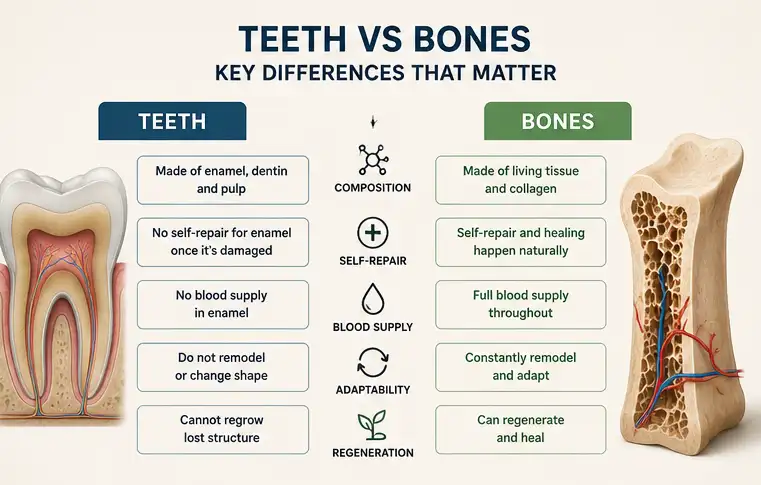
A clearer side-by-side comparison
| Feature | Teeth | Bones |
|---|---|---|
| Living tissue | Partial (pulp only) | Fully living |
| Self-repair | Very limited | Strong |
| Blood supply | Only inside pulp | Entire structure |
| Remodeling | No | Yes |
| Regeneration | No (enamel) | Yes |
| Hardness | Extremely high | Moderate |
This is where the misunderstanding usually ends. The biology just doesn’t match.
Why this matters more than people think
If you treat teeth like bones, you assume they recover on their own.
That assumption leads to:
- ignoring early decay
- delaying fillings
- underestimating sensitivity
- misunderstanding gum and tooth problems
Teeth don’t reward delay. They respond to it.
What starts as a minor issue often becomes structural damage that requires more invasive treatment later.
That’s the uncomfortable reality behind most dental problems.
FAQ
No. Teeth are mineralized structures, but they don’t have the same living, self-repair system as bones.
Because enamel has no living cells. Once it’s damaged, the body can’t regenerate it.
Only the pulp the inner core containing nerves and blood vessels.
Yes in hardness, but it’s also more brittle and non-regenerative.
It can sometimes remineralize slightly in early stages, but not fully repair structural loss.
Why people choose Winchmore Hill Dental Practice
Winchmore Hill Dental Practice is often where many patient come when something feels “not quite right” but they’re not sure what it is yet. That in-between stage where it’s not severe pain, just doubt, sensitivity, or a nagging concern you can’t ignore anymore.
What makes a difference here is getting clear answers. Not guesswork, not rushed opinions. Just a proper look at what’s going on, what’s fine, and what actually needs attention now.
The goal is simple:
- understand the real issue
- explain it in plain language
- treat only what truly needs treating
Nothing overcomplicated.
Small problems are always easier to deal with early. If you are still not clear and want more help about your oral health, get advice or simply book a dental check-up at Winchmore Hill Dental Practice, where our dental team will guide you through the whole process and provide clear, knowledgeable support every step of the way.