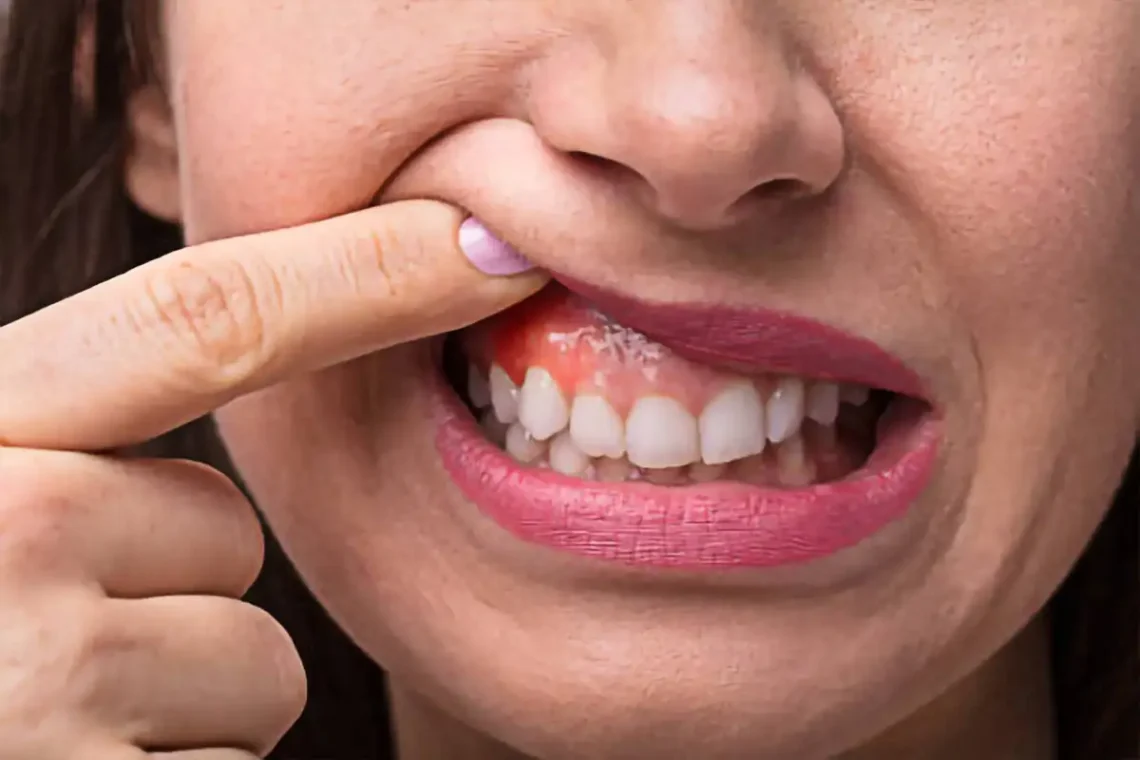
A hole in your gum usually means something has already gone wrong underneath and your body has found a way to drain it out.
Sometimes it’s a burst gum abscess. Sometimes it’s gum disease slowly eating away the tissue. Sometimes it’s a tooth deep down causing trouble and the gum is just acting like an exit point. Either way, it’s not random.
If you’re looking at it thinking it appeared out of nowhere, it didn’t.
What that “hole” usually is in “gum”
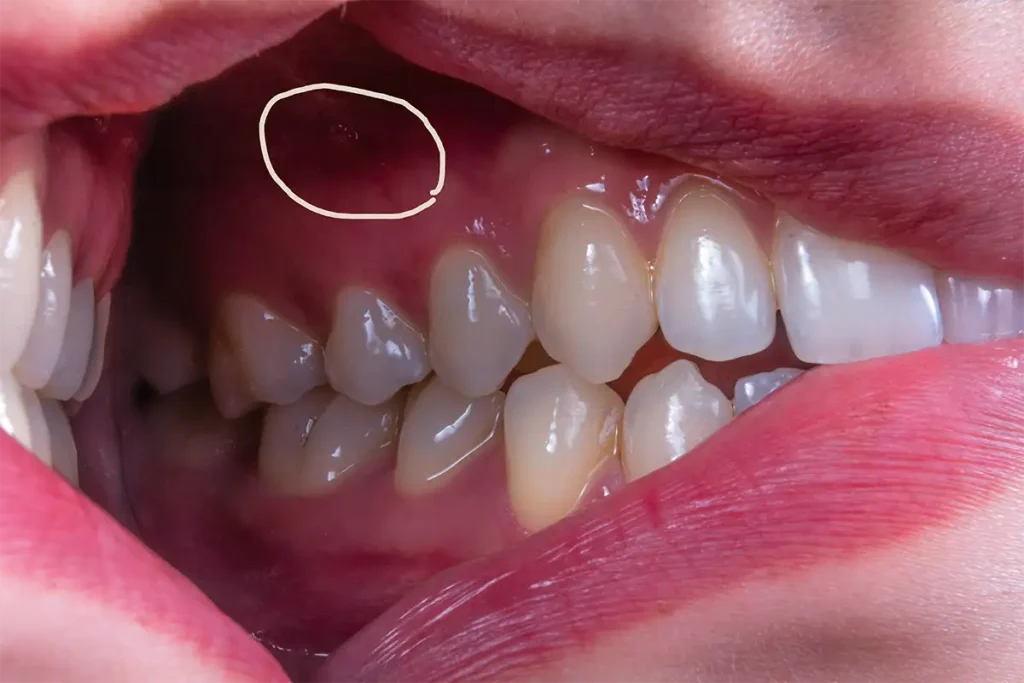
People say “hole,” but it rarely looks like a clean hole. It’s more like a small opening, a dip in the gum, or a spot that keeps releasing fluid.
In real terms, it’s often one of these:
A drained infection that used to be painful and swollen
A small channel your body created to release pus
A deep gum pocket where tissue has detached from the tooth
A healing socket after a tooth extraction that didn’t settle properly
A drainage point from an infected tooth root
If it ever tastes bad or leaks fluid when you press nearby, that’s infection still active. Not healed.
The abscess version (the one people miss the most)
This one starts with pain. Throbbing, pressure, sometimes swelling in the cheek or gum. Then something changes — the pain suddenly drops.
That’s when people assume it’s getting better.
What actually happened is the infection found an exit.
So now you’re left with a small opening in the gum and maybe a weird taste that comes and goes. Sometimes you’ll notice it flares up again after a few days, then settles again.
That cycle is the infection never fully going away.
Gum disease doesn’t announce itself
Gum disease doesn’t usually feel dramatic. It’s slow, quiet, and easy to ignore until you notice something like a gap, a pocket, or that “hole” feeling near a tooth.
You might see:
Gums pulling away from teeth
Bleeding when brushing that you’ve stopped worrying about
Bad breath that doesn’t improve even after cleaning
Food getting stuck in the same spot again and again
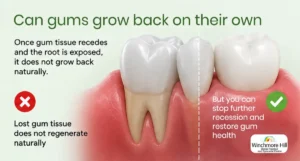
At that stage, what you’re seeing isn’t a surface wound. It’s tissue loss around the tooth. The gum has literally stopped gripping the tooth the way it should.
That condition sits under what dentists call Periodontitis. And once it reaches that point, brushing harder won’t fix it. It just irritates things more.
The tooth problem hiding underneath
This is where things get less obvious.
Sometimes the gum looks like the issue, but the real problem is a dead or infected tooth root. The gum just becomes the pressure release point.
You’ll often see it near one specific tooth. Not random spots.
Typical signs:
You remember having sensitivity in that tooth months ago
Pressure when chewing on one side
A dark or slightly “off” looking tooth
Swelling that keeps returning in the same area
The gum opening in this case is basically a drainage route for a deeper infection. Dentists often trace it back using X-rays, not by looking at the gum alone.
After extraction, it’s not always smooth healing
A tooth socket should slowly close over time. It doesn’t always behave.
If the area still looks open after a couple of weeks, especially with discomfort or smell, something’s off.
Food getting stuck in there is a common complaint. It feels minor, but it slows healing and keeps bacteria active.
In some cases, this overlaps with Dry Socket, which is more painful and usually more noticeable than people expect.

When it’s actually just damage
Not everything is infection.
Hard food, aggressive brushing, or even biting something sharp can tear gum tissue. That can leave a small open spot that looks worrying but behaves differently.
The difference shows up in how it feels:
No bad taste
No swelling
Pain reduces steadily instead of coming and going
Clear memory of when it happened
Those usually settle down without drama if you leave them alone and keep the area clean.
What you should not ignore a Hole in Gum:
A lot of people wait because the pain calms down. That’s where things get misleading.
Pain dropping doesn’t always mean healing. Sometimes it just means pressure has found a way out.
Watch for:
Any discharge, even occasional
Swelling that comes and goes
A bad taste that keeps returning
The spot staying open beyond a week or two
Pain when biting on one side
If more than one of these shows up, it’s not something to “wait and see” forever.
Hole in Gum: What actually helps at home
You’re not fixing the cause at home, but you can stop it getting worse.
Warm salt water rinses, gently
Normal brushing, just not aggressive near the spot
Flossing carefully around nearby teeth
Avoid poking the area (people do this more than they admit)
Cutting down sticky or sugary food that lingers around the gum line
Mouthwash can help keep things clean, but it won’t close anything or treat infection.
What a dentist is really checking
When you sit in the chair with this problem, they’re not just looking at the gum.
They’re trying to figure out where it started.
They’ll usually:
Check the gum depth around nearby teeth
Tap and test the tooth for sensitivity
Take an X-ray to see what’s happening under the surface
Look for infection paths between tooth and gum
Treatment depends on what they find. Cleaning for gum disease. Drainage and treatment for abscess. Root canal or removal if the tooth is the source.
Places like NHS and American Dental Association describe the same core approach: you treat the source, not just the surface opening.
North London reality (what dentists actually see)
In areas like North London, dentists see this more often than people think. Not because the condition is unique there, but because it gets ignored until it becomes visible.
Busy routines. Delayed checkups. “It stopped hurting so I left it.”
By the time someone notices a gum opening, the infection has usually already been active for a while. That’s why treatment tends to be more about stopping progression than dealing with something early.
Winchmore Hill Dental Practice
A gum hole isn’t the real problem on its own. It’s just the visible part. What matters is what’s happening underneath, and that’s where proper diagnosis makes a difference.
If you are expeiencing something in your gum looks open, changes taste, or keeps coming back in the same spot, it’s worth getting checked sooner rather than waiting for it to behave.
Winchmore Hill Dental Practice deals with cases like this in a pretty straightforward way. No overcomplication. We look at what’s actually causing the issue before jumping into treatment, which matters here more than people realise.