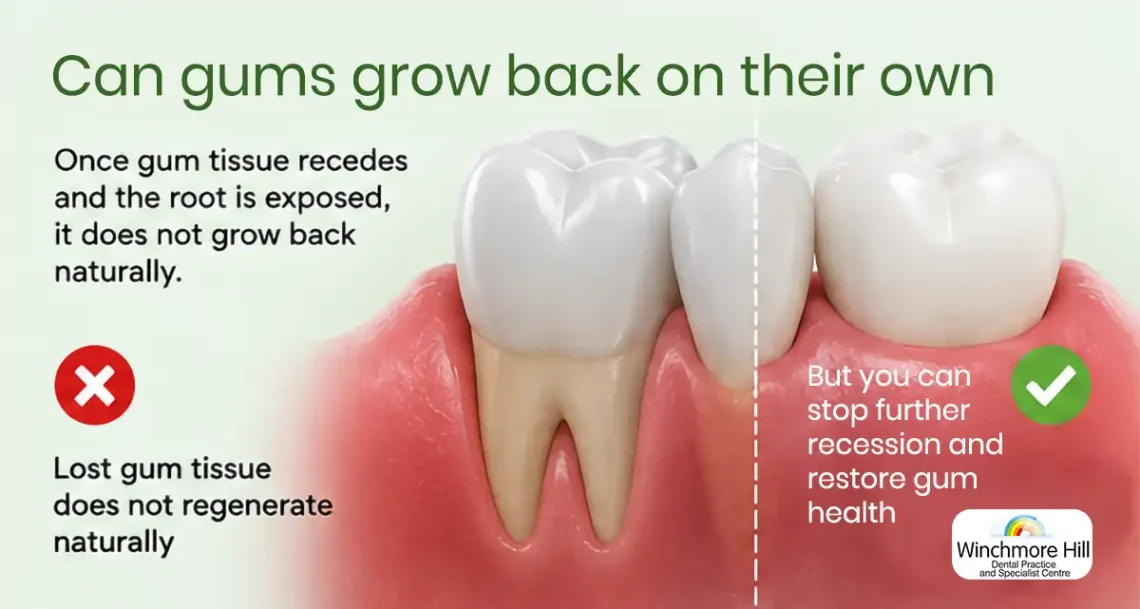
No, your gums usually cannot grow back on their own once they have physically receded. Unlike skin or some other tissues, gum tissue does not naturally regenerate to cover exposed tooth roots again.
But that does not mean the situation is hopeless.
You can often stop gum recession from getting worse, rebuild healthier gum tissue around your teeth, and in some cases restore lost gum coverage with dental treatments.
A lot of people notice their teeth look longer and immediately think, “My gums disappeared. Can they come back?” The answer depends on why they receded, how much tissue has been lost, and how early the problem is treated.
Why Do Gums Recede in the First Place?
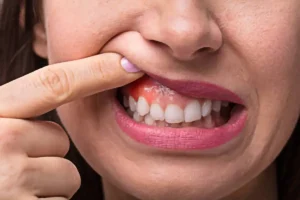
Gum recession happens when the gum tissue around a tooth pulls away, exposing more of the tooth surface or root.
The common causes are not always what people expect.
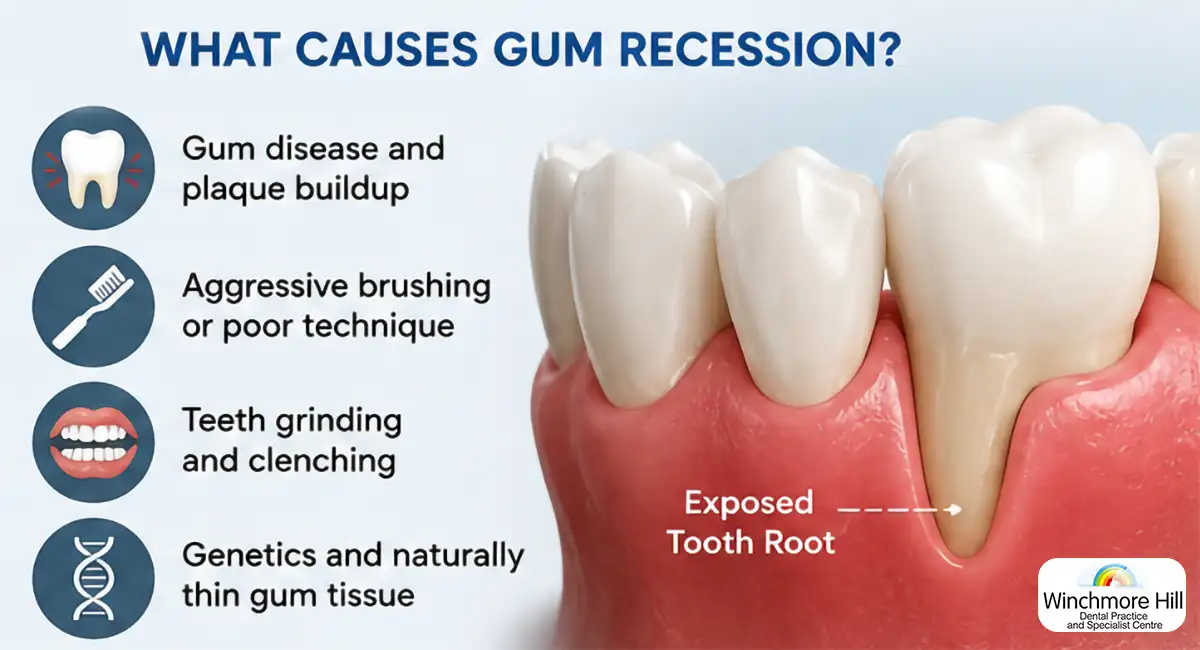
Most people blame brushing too hard. That can contribute, but dentists often see a combination of factors.
1. Gum disease (the biggest cause)
When plaque and bacteria build up around the gumline, the body reacts with inflammation.
At first, this is gingivitis swollen and bleeding gums.
If it continues, it can develop into periodontitis, where the infection starts damaging the supporting structures around the teeth, including bone and gum attachment.
According to the American Dental Association, maintaining good oral hygiene and regular dental care plays a major role in preventing gum disease progression.
The tricky part?
Gum disease can progress quietly. Many people do not feel pain until significant damage has already happened.
2. Brushing too aggressively
More pressure does not mean cleaner teeth.
A hard toothbrush, aggressive horizontal brushing, or scrubbing the same area repeatedly can wear away gum tissue over time.
A common pattern dentists notice:
- Recession on the side where someone brushes hardest
- Gum loss around canines because they naturally stick out more
- Damage from using a firm brush for years
The solution is usually not “stop brushing.” It is learning controlled brushing.
3. Teeth grinding and bite pressure
This one is less talked about.
If a tooth receives excessive force from grinding, clenching, or an uneven bite, the surrounding tissues can become stressed.
This does not directly “pull gums away,” but it can make the area more vulnerable, especially when combined with inflammation.
4. Natural anatomy
Some people simply have thinner gum tissue.
A person with naturally thin gums may develop recession more easily from:
- Orthodontic movement
- Brushing habits
- Minor trauma
- Gum inflammation
Two people can have identical brushing habits, but one develops recession because their gum thickness is different.
Can Your Gums Grow Back Without Surgery?
This is where many online answers become misleading.
If the gum has only been irritated or inflamed, it can heal and become healthier.
For example:
- Bleeding gums caused by gingivitis can improve
- Swelling can reduce
- Gum tissue can become tighter around teeth
But if actual gum tissue has been lost and the tooth root is exposed, the missing tissue usually does not grow back naturally.
Think of it like a receding hairline. Improving health can protect what remains, but it does not automatically recreate what has already disappeared.
What Can Restore Receding Gums?
Treatment depends on the amount of recession and the health of the gums.
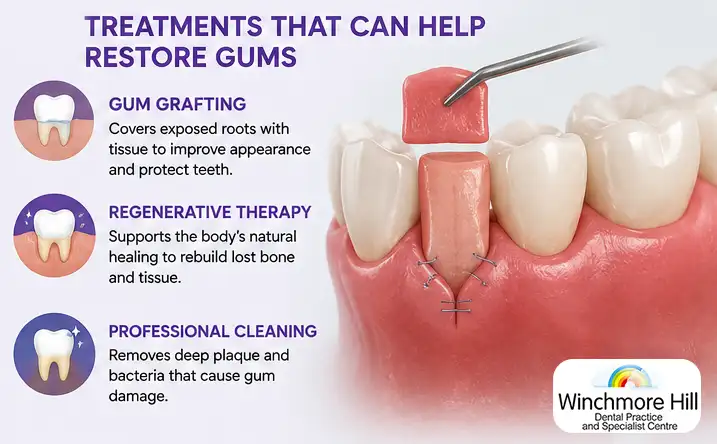
1. Professional deep cleaning
If recession is linked to gum disease, the first step is often removing bacteria and hardened deposits.
A dentist or dental hygienist may recommend:
- Scaling
- Root surface cleaning
- Periodontal maintenance visits
Healthy gums create a better environment for healing.
2. Gum grafting
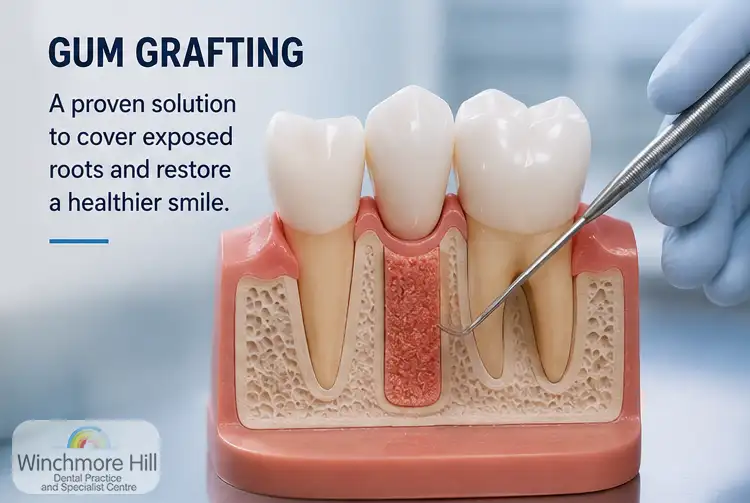
For moderate or severe recession, gum grafting is one of the most predictable treatments.
During this procedure, a dentist places tissue over the exposed root area.
The tissue may come from:
- The roof of your mouth
- Donor tissue material
- Advanced regenerative materials
Gum grafting can help:
- Cover exposed roots
- Reduce sensitivity
- Improve appearance
- Protect vulnerable tooth surfaces
The result is not always a perfect “replacement” of the original gum line, but many patients see a significant improvement.
3. Regenerative treatments
In some cases where bone and attachment tissues are affected, dentists may use regenerative techniques.
These can include:
- Special membranes
- Bone graft materials
- Growth-supporting materials
These treatments are more case-dependent and usually require careful evaluation.
Things People Try That Usually Do Not Fix Gum Recession
There are many claims about “growing gums back naturally.”
Some suggestions may support gum health, but they do not rebuild lost tissue.
Oil pulling
Oil pulling may help some people improve their mouth routine, but it does not regenerate missing gum tissue.
Special toothpaste
Desensitizing toothpaste can reduce discomfort from exposed roots.
It cannot physically move gums back into place.
Vitamin supplements
A balanced diet supports healing, but vitamins alone will not reverse recession caused by mechanical damage or periodontal disease.
How To Prevent Your Gums From Receding Further
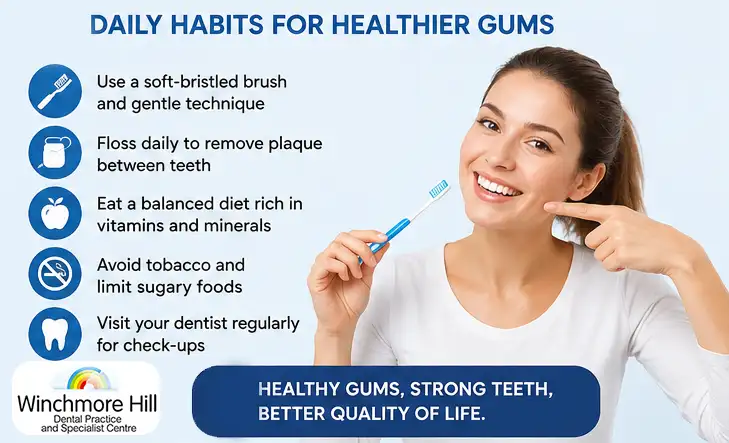
Once gums start receding, prevention becomes extremely important.
Small daily changes matter.
| Habit | Why it helps |
|---|---|
| Use a soft toothbrush | Reduces unnecessary gum trauma |
| Brush gently near the gumline | Removes plaque without damaging tissue |
| Floss correctly | Prevents bacteria buildup between teeth |
| Treat bleeding gums early | Stops inflammation before deeper damage |
| Avoid tobacco products | Protects gum healing ability |
| Attend dental checkups | Finds problems before major damage |
A detail many people miss: flossing incorrectly can also injure gums. Snapping floss aggressively into the gums can create repeated trauma.
Foods and Lifestyle Habits That Support Gum Health
Food cannot regrow lost gums, but it influences how well your mouth handles inflammation.
Helpful choices include:
- Protein-rich foods for tissue repair
- Vitamin C sources for collagen production
- Crunchy fruits and vegetables that stimulate saliva
- Adequate hydration
Frequent sugar exposure is often more damaging than a single sugary snack because bacteria get repeated opportunities to produce acid.
How Dentists Decide If Gum Recession Needs Treatment
Dentists usually look at:
- How many millimeters the gum has moved
- Whether the root is exposed
- Bone levels around the tooth
- Gum thickness
- Tooth sensitivity
- Cleaning ability around the area
A small recession that is stable may only need monitoring.
A recession that keeps progressing needs intervention.
The goal is not always “make gums look perfect.” The goal is keeping teeth stable and comfortable long-term.
FAQ:
No, lost gum tissue usually does not grow back, but stopping aggressive brushing can prevent further damage.
Inflamed gums can heal, but true gum recession usually requires dental treatment if tissue has been lost.
Modern techniques make gum grafting more comfortable than many people expect. Most patients report manageable soreness during recovery.
Severe untreated gum disease can weaken tooth support and increase the risk of tooth loss.
Restore Healthy Gums With Winchmore Hill Dental Practice
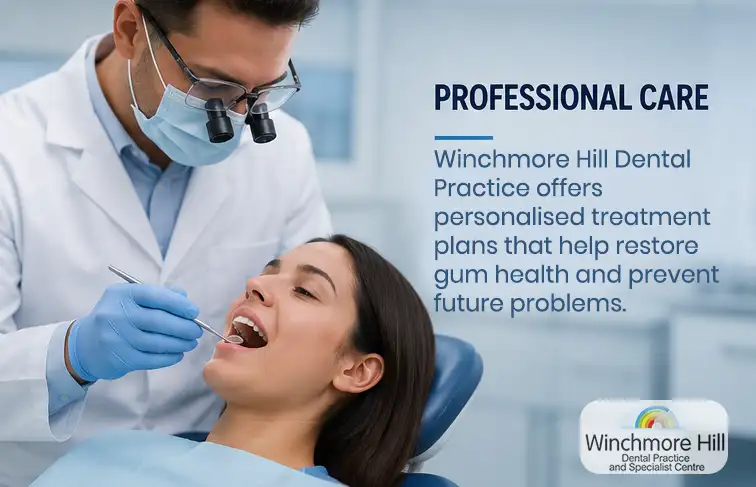
Winchmore Hill Dental Practice focuses on understanding why your gums are changing before recommending treatment.
Gum problems are not always solved with a quick cleaning or a temporary fix. A proper assessment looks at your gum condition, tooth support, daily habits, and the factors causing the recession.
Whether you are dealing with sensitivity, bleeding gums, gum recession, or concerns about your smile, getting advice early can make a major difference.
Book an appointment with Winchmore Hill Dental Practice to discuss your gum health and find the right approach for protecting your teeth.