Understanding Tooth Replacement Options in London
Losing a tooth can impact more than just your smile — it affects how you eat, speak, and feel. Many patients today find themselves choosing between dental bridges and dental implants to restore their smiles. Both are effective, but the right choice depends on your oral health, lifestyle, and long-term goals.
At Winchmore Hill Dental Practice, we guide patients through both options to ensure natural-looking, lasting results. In this post, Dr Mahesh Patel explains the differences between dental bridges and implants, helping you make an informed, confident choice.
What Is a Dental Bridge?
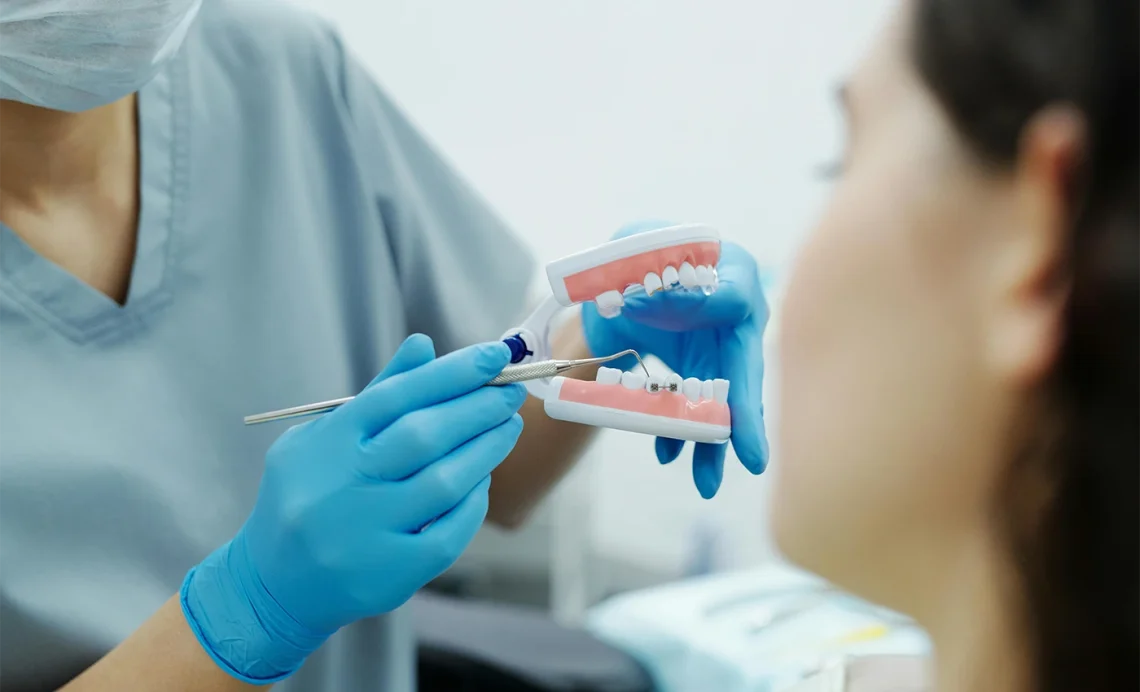
A dental bridge is a prosthetic device that replaces one or more missing teeth by “bridging” the gap between adjacent healthy teeth. The neighbouring teeth are usually filed down and fitted with crowns to hold the artificial tooth (pontic) in place.
Modern dental bridges in London are designed using high-quality ceramic materials that look and feel natural. They’re often recommended for patients seeking a faster or more affordable option when compared to implants.
However, since bridges rely on surrounding teeth for support, they may not preserve jawbone health as effectively as implants.
What Is a Dental Implant?
A dental implant is a small titanium post surgically placed into the jawbone, acting as a root for a replacement tooth. Once healed, it’s topped with a custom-made crown that mimics the shape and colour of your natural teeth.
Dental implants are considered the gold standard in London for tooth replacement because they provide stability, bone preservation, and longevity. With proper care, implants can last decades or even a lifetime — often outlasting traditional bridges.
They also prevent bone loss and maintain facial structure, making them an excellent long-term investment in your oral health.
Dental Bridge vs Implant: A Comparison of Benefits
When deciding between a dental bridge or implant, it’s important to weigh the advantages of each:
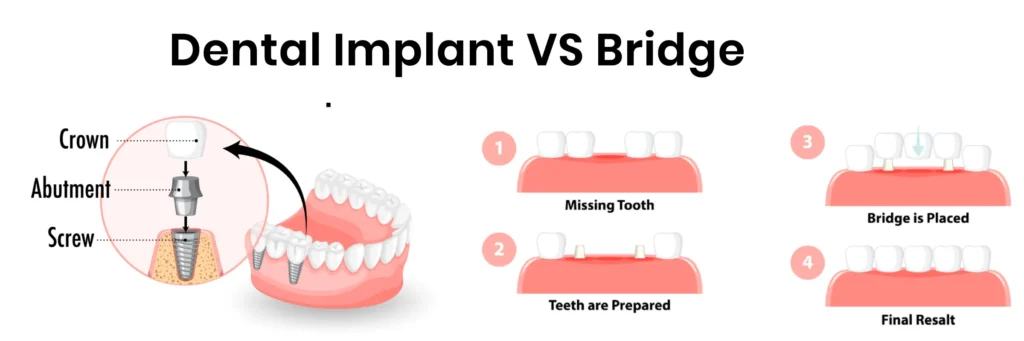
| Feature | Dental Bridge | Dental Implant |
|---|---|---|
| Procedure Time | Quick (1–2 visits) | Longer (healing time required) |
| Durability | 7–10 years | 20+ years |
| Bone Preservation | None | Prevents bone loss |
| Effect on Adjacent Teeth | Requires filing down | No impact |
| Aesthetic Result | Natural, but may wear | Most natural and durable |
For those prioritizing speed and budget, bridges remain a popular choice. But if you value long-term health, function, and appearance, implants often provide the best overall outcome.
When Is a Dental Bridge Better?
A dental bridge can be a better option when:
- Adjacent teeth already need crowns or fillings.
- There’s insufficient bone density for an implant.
- You prefer a quicker, non-surgical solution.
In such cases, we can design a strong, aesthetic bridge that blends naturally with your smile. For many, this approach offers immediate function and confidence with minimal downtime.
When Is a Dental Implant the Best Choice?
A dental implant is ideal when:
- You’ve lost a single tooth or multiple teeth.
- You want to prevent jawbone shrinkage.
- You’re looking for a long-term or permanent replacement.
Implants also support other restorations like implant bridges or dentures, making them versatile. Many London patients choose implants for their stability, natural feel, and the confidence of knowing they won’t need frequent replacements.
How London Dentists Decide Between a Bridge or Implant
A professional evaluation includes checking your bone density, gum health, and bite alignment. Using 3D scans and digital imaging, As London’s dental specialists, we assess whether your jaw can support an implant or if a bridge would be more suitable.
The decision also depends on your overall health, oral hygiene habits, and aesthetic preferences. In many cases, we recommend dental implants for single-tooth replacements, while bridges may be ideal for adjacent missing teeth.

Expert Insight: Why Prefer Implants for Long-Term Health
While both treatments restore your smile, implants offer superior long-term oral health benefits. They integrate with the bone, preventing the jaw from shrinking and maintaining facial volume — something bridges can’t achieve.
That’s why we recommend implants as a more sustainable investment, particularly for patients seeking durability and aesthetics that last decades.
Why Patients in London Trust Us for Tooth Replacement
At Winchmore Hill Dental Practice, we combine precision technology with compassionate care to restore smiles that look and feel natural. We assess each case individually, offering tailored solutions — whether it’s a bridge, implant, or combination treatment.
We focus on comfort, function, and long-term success — ensuring you receive the most reliable solution for your oral health and confidence.
🦷 FAQs – Dental Bridge vs Implant
The biggest difference is how each replaces a missing tooth. A dental bridge uses neighbouring teeth as anchors to hold an artificial tooth in place, while a dental implant is surgically placed into the jawbone, acting as a root for a new tooth. Implants are more durable and preserve bone health, whereas bridges provide a faster, non-surgical solution.
It depends on your oral health and goals. Dental implants are generally considered the most long-lasting and natural-feeling option. However, a dental bridge may be better if you have weaker bone density or prefer a quicker, more affordable treatment. A consultation with a London dentist helps determine which is right for you.
A well-cared-for dental bridge can last around 7–10 years, while a dental implant can last over 20 years — sometimes even a lifetime. The longevity of both depends on your oral hygiene, diet, and regular dental checkups.
Modern dental implant procedures in London are performed under local anaesthetic and are generally painless. Most patients report only mild discomfort afterward, which subsides within a few days. Compared to older methods, today’s techniques make implant placement safe and comfortable.
Both can achieve excellent cosmetic results, but dental implants typically provide the most natural appearance and feel. Because they’re anchored in the bone, implants closely mimic natural tooth structure and help maintain your facial shape.
Yes. Multiple dental implants can support implant bridges or full-arch restorations, while traditional bridges can replace a few missing teeth in a row. Your London dental specialist will recommend the best option based on your specific case and long-term goals.